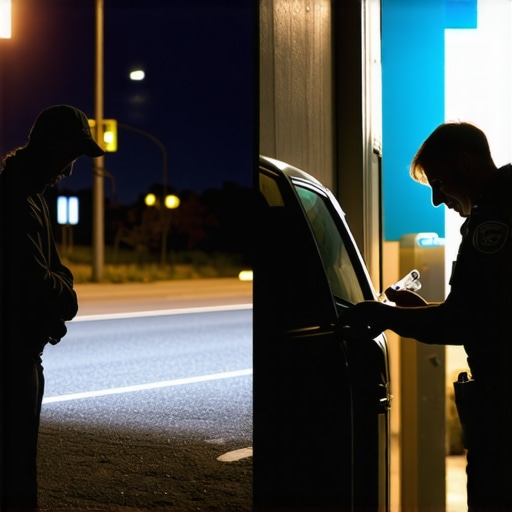
The smell of burnt coffee and stale adrenaline usually defines the atmosphere of my office at 3 AM. If you are reading this, your life is likely in a state of forensic collapse. You were pulled over, you blew into a machine or gave a vial of blood, and now you are navigating a labyrinth of acronyms. I watched a client lose their entire claim in the first ten minutes of a deposition because they ignored one simple rule about silence. They thought they could explain their way out of a mistake. They were wrong. In the courtroom, words are not tools for clarity. They are evidence used to construct your cage. You need to understand that the difference between a DUI and a DWI is not just a matter of semantics. It is a matter of statutory leverage that the state will use to strip you of your license, your livelihood, and your liberty.
The legal reality of impaired driving definitions
DUI and DWI serve as the primary statutory frameworks for impaired driving offenses across various jurisdictions. A DUI lawyer analyzes these charges based on blood alcohol concentration or the presence of controlled substances. While some states treat driving under the influence as a misdemeanor, others categorize driving while intoxicated as a more severe felony offense depending on impairment levels.
Most people believe these terms are interchangeable. They are not. In some states, a DUI is a lesser charge, often used when a driver is under twenty-one or shows minimal impairment. A DWI is the heavy hitter. It implies a higher level of intoxication, usually meeting or exceeding the 0.08 percent threshold. You are not just fighting a ticket. You are fighting a biological measurement that the law has deemed infallible. I have seen cases fall apart because a defendant thought they were being helpful. Silence is your only ally. When you speak, you provide the narrative glue that holds the prosecution’s disparate facts together. The police report is already written against you. Your goal is not to fix it. Your goal is to make it inadmissible.
“Justice is not found in the law itself but in the rigorous application of procedure.” – Common Law Maxim
The blood alcohol threshold that breaks your case
The legal limit for blood alcohol concentration is almost universally set at 0.08 percent for non-commercial drivers. DUI defense strategies often focus on the calibration logs of breathalyzer machines and the chain of custody for blood samples. An attorney will scrutinize the gas chromatography results to identify analytical errors that could lead to an acquittal.
Statutory zooming requires us to look at the Intoxilyzer 8000. This machine is a black box. The software is proprietary. The defense rarely gets to see the source code. However, we can see the maintenance records. If the machine hasn’t been calibrated within the last thirty days, the results are garbage. If the officer didn’t observe you for twenty minutes prior to the test, the results are garbage. Any residual alcohol in your mouth can spike the reading. We look for the margin of error. If you blew a 0.081, that 0.001 is the difference between a criminal record and a walk home. The state wants you to believe the number is a god. It is actually just a flawed calculation by a machine that was likely neglected by a budget-strapped police department.
Why your field sobriety test was a trap
Standardized field sobriety tests consist of the horizontal gaze nystagmus, the walk and turn, and the one-leg stand. These physical assessments are designed by the National Highway Traffic Safety Administration to establish probable cause. A dui attorney understands that these tests are subjective and often influenced by environmental factors like unlevel pavement or officer bias.
The walk and turn is not a balance test. It is a divided attention task. They want to see if you can follow instructions while under stress. They are looking for eight specific clues. If you start before the instructions are finished, that is a clue. If you lose your balance while listening, that is a clue. You could be a professional athlete with a vestibular inner ear infection, and you would still fail. The horizontal gaze nystagmus test is even more insidious. The officer is looking for an involuntary jerking of the eye. They are not doctors. They are not ophthalmologists. Yet, their subjective observation of your pupil movement is treated as scientific fact. It is a rigged game. The only way to win is to challenge the administration of the test itself. Was the lighting adequate? Was the officer’s flashlight moving too fast? These are the procedural levers we pull to collapse the prosecution’s house of cards.
Tactical motions that dismantle the prosecution evidence
A motion to suppress is a procedural tool used to exclude evidence obtained through unconstitutional searches or seizures. In dui legal proceedings, challenging the reasonable suspicion for the traffic stop can result in the dismissal of charges. If the arresting officer violated Fourth Amendment protections, all subsequent evidence becomes fruit of the poisonous tree.
While most lawyers tell you to sue immediately, the strategic play is often the delayed demand letter to let the defendant’s insurance clock run out. We wait for the police video to be archived or, in some cases, accidentally deleted. We file motions for the production of the officer’s training files. We want to know if they have a history of failed certifications. The prosecution wants a quick plea. They want you to sign the papers and go away. We do the opposite. We create a paper storm. We challenge the stop. Did you actually cross the fog line, or did the officer just need an excuse to hit the lights? If the stop is illegal, everything that happens after is irrelevant. The breath test, the confession, the open container in the backseat. It all vanishes.
“The defense of the accused is the primary safeguard of a free society, ensuring that the state meets its heavy burden of proof.” – American Bar Association Journal
The administrative license hearing you are probably going to lose
The administrative license revocation process is a civil proceeding separate from your criminal case. This hearing determines the status of your driving privileges through the Department of Motor Vehicles. Success requires a dui lawyer to prove that the officer lacked probable cause or failed to provide the implied consent warning correctly.
This is where the state gets you. Even if you are found innocent in criminal court, the DMV can still take your license. The burden of proof is lower. It is a preponderance of evidence, not beyond a reasonable doubt. It is a kangaroo court run by hearing officers who are often employees of the very agency trying to suspend you. You have a narrow window, usually ten days, to request this hearing. If you miss it, you are walking for six months. We use these hearings as a discovery tool. We get the officer under oath before the prosecutor has a chance to prep them. We find the inconsistencies between their testimony and their written report. We may lose the license for a few months, but we gain the ammunition needed to win the criminal trial. It is a tactical sacrifice.
Selecting a trial lawyer who actually fights
Finding a dui attorney who is willing to go to verdict is essential for a strong defense. Many law firms operate as settlement mills, prioritizing high turnover over litigation. You must call an attorney who understands forensic toxicology and procedural law to protect your constitutional rights during a criminal trial.
Don’t be fooled by the billboards. The guy in the suit with the bright smile has probably not seen the inside of a courtroom in five years. You want the lawyer who looks like they haven’t slept, the one who knows the names of the lab technicians and the serial numbers of the breathalyzers. Litigation is war. It is about logistics, timing, and the psychological pressure you put on the prosecutor. If they know your lawyer will actually take the case to a jury, the plea offers get better. If they know your lawyer is afraid of a trial, you are going to get the worst deal possible. The law is not a shield. It is a sword. You need someone who knows how to swing it. Stop looking for a friend. Start looking for a strategist who hates to lose more than you do. Your future is a series of procedural hurdles. Don’t trip on the first one.”