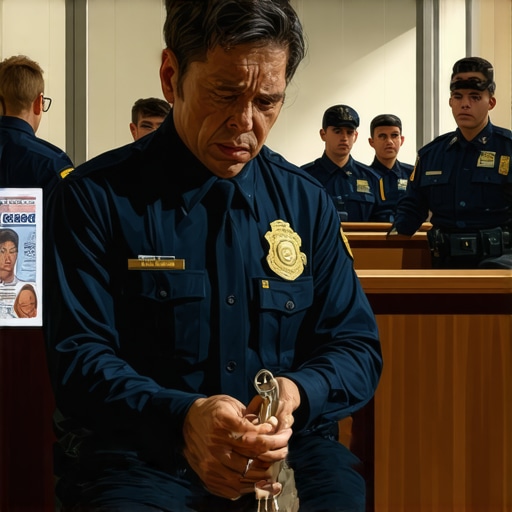
Why Every Second Counts After a DUI Arrest
The smell of strong black coffee is the only thing keeping this office grounded while the world outside spins in a haze of bad decisions and worse timing. You think you have time. You think the system will wait for you to find your bearings. It will not. I watched a client lose their entire claim in the first ten minutes of a deposition because they ignored one simple rule about silence and timing. They waited forty-eight hours to contact me after their arrest. In that window, the evidence that could have dismantled the prosecution’s case evaporated into the ether. Every second you spend wondering if you need a dui attorney is a second the state uses to cement your conviction. The legal machinery of the state is already grinding against you. If you are not actively pushing back, you are being crushed. This is not a drill; it is a calculated forensic countdown.
The clock that starts the moment you see the blue lights
Calling a dui attorney immediately ensures that your constitutional rights are protected during the most vulnerable phase of the investigation. The prosecution begins building their case the moment an officer activates their lights, and every statement you make or test you perform provides them with ammunition for the courtroom. The moment you pull over, the officer is looking for specific cues. They are trained to see what they want to see. Your eyes are watery because of allergies; they write down intoxication. You fumble with your registration because you are nervous; they write down impaired motor skills. By the time you reach the station, the narrative is already written. A dui defense begins with the preservation of reality before the police report can rewrite it. You must understand that the police are not there to help you. They are there to gather evidence. Silence is your only shield, but even silence has a shelf life if you do not have a dui lawyer to reinforce it. The administrative hurdles alone are enough to drown a person who is trying to navigate this alone. You are fighting a war on two fronts: the criminal court and the department of motor vehicles. Both have different rules, different deadlines, and the same goal of taking away your freedom and your mobility.
“Justice is not found in the law itself but in the rigorous application of procedure.” – Common Law Maxim
Ten days to save your ability to drive
The ten day rule is a strict administrative deadline where you must request a formal hearing to contest the automatic suspension of your driver license. Failure to act within this narrow window results in a mandatory loss of driving privileges regardless of the eventual outcome of your criminal case. Most people do not realize that their license is already on its way to being suspended before they even step foot in a courtroom. The officer likely handed you a piece of paper that serves as a temporary permit. Read it. It is a ticking bomb. In many jurisdictions, you have exactly ten days to file for an administrative hearing. If you miss that window, your license is gone. No exceptions. No excuses. This is where dui legal expertise becomes a logistical necessity. An attorney can file the necessary paperwork to stay the suspension, allowing you to keep driving while the case is litigated. We look at the calibration logs of the breathalyzer used. We look at the certification of the officer who administered the test. Was the machine serviced in the last thirty days? Was the officer’s certification current? If the answer is no, we have a leverage point. But if you wait eleven days to call an attorney, those leverage points do not matter because the administrative judge will not even hear the case. You have effectively pleaded guilty to the DMV without a fight.
The chemistry of a disappearing defense
Biological evidence such as blood alcohol content begins to change the moment it is collected and requires immediate independent analysis to verify accuracy. A dui defense lawyer must secure the right to retest samples before degradation or laboratory errors become permanent fixtures of the prosecution case file. The state relies on the assumption that their science is infallible. It is not. Blood samples can ferment if not stored at the exact right temperature. Anticoagulants can be missing from the vial. The gas chromatograph used to test the sample might not have been purged correctly between runs. But here is the brutal truth: if you wait weeks to hire a dui lawyer, the state may have already destroyed the blood vials or the samples may have degraded beyond the point of a viable retest. We need to issue a preservation letter immediately. We need to see the raw data from the laboratory, not just the final number on a report. Forensic evidence is only as good as the chain of custody and the maintenance of the equipment. We hunt for the gaps in that chain. We look for the ghost in the machine. If the machine was not calibrated to the exact specifications of the state statute, the result is a guess, not a fact. In the courtroom, we do not deal in guesses.
“The right to counsel is the right to the effective assistance of counsel.” – McMann v. Richardson
Why your silence is the only asset you have left
Remaining silent is a strategic legal maneuver that prevents the prosecution from using your own words to fill gaps in their evidence. A dui attorney will advise you that providing any information beyond basic identification only serves to strengthen the state’s narrative of impairment and guilt. People have a natural urge to explain themselves. They think they can talk their way out of a pair of handcuffs. You cannot. Every word you speak is recorded on a body camera. If you say you had two beers, the prosecutor will argue you actually had four. If you say you are tired, they will argue you were nodding off from alcohol. The tactical play is the delayed demand letter to let the defendant’s insurance clock run out or to let the officer’s memory fade, but that only works if you have not already handed them a full confession on camera. Case data from the field indicates that the most successful defenses are built on a foundation of absolute silence from the defendant. Let the dui legal team do the talking. We know the procedural traps. We know the specific wording that can turn a simple admission into a conviction. You do not. Your job is to stay quiet and let us build the wall. The prosecution wants you to be helpful. They want you to be polite. They want you to be their star witness against yourself. Do not give them the satisfaction.
The myth of the roadside breath test
Field sobriety tests and portable breathalyzers are notoriously unreliable tools used to establish probable cause rather than scientific proof of intoxication. Challenging the administration and environment of these tests is a primary objective for a dui lawyer during the discovery phase of litigation. Have you ever tried to stand on one leg on the side of a highway with semi trucks screaming past you at seventy miles per hour? It is a test designed for failure. The National Highway Traffic Safety Administration has strict guidelines for how these tests are to be performed. They must be done on a level, dry surface. The lighting must be adequate. The instructions must be read verbatim. If the officer deviated by even a few words, the test results can be suppressed. The portable breath test you take on the road is even worse. It is a preliminary screening device, not an evidentiary tool. It is sensitive to temperature, mouth alcohol, and even certain types of gum or toothpaste. We deconstruct the video footage second by second. We look for the officer’s failure to observe the required fifteen minute observation period before the test. If they did not watch you for those fifteen minutes, the test is invalid. But we can only find those flaws if we get the footage before it is overwritten by the police department’s server. Time is the enemy of the truth in these cases.
How a defense attorney builds a wall around your future
A comprehensive legal strategy involves attacking the initial stop the field evidence and the forensic procedures to create reasonable doubt in the mind of a jury. Professional dui defense requires an aggressive posture that challenges the state at every procedural turn to secure a dismissal or reduction. Litigation is not about being nice; it is about being right. We look for the lack of reasonable articulable suspicion for the initial stop. If the officer did not have a valid reason to pull you over, everything that happened after that is fruit of the poisonous tree. It all gets thrown out. This is the microscopic reality of the law. We are not looking for a needle in a haystack; we are looking for the one loose thread that unspools the entire prosecution garment. While most lawyers tell you to sue immediately or settle fast, the strategic play is often a methodical dismantling of the state’s timeline. We subpoena the officer’s training records. We check the expiration dates on the chemical reagents used in the lab. We interview the witnesses that the police ignored. This level of detail takes time, but it must start the moment the arrest happens. If you are serious about your future, you do not wait for the court date to arrive. You call an attorney today. You put a veteran trial lawyer between you and the state. You stop the bleeding before it becomes a fatal wound to your career and your reputation. The final verdict is not written in stone until the last motion is argued. Make sure you have someone who knows how to win that argument.