The Science of Defeating the DUI Charge Through Procedural Warfare
I am looking at your police report while drinking cold black coffee, and the reality is bleak. You talked too much. I watched a client lose their entire claim in the first ten minutes of a deposition because they ignored one simple rule about silence, and the same mechanism applies to your roadside interaction. Most people think they can charm an officer or explain away the three drinks they had at dinner. They cannot. Every word you spoke is a brick in the wall of the prosecution’s case. My job is to find the cracks in that wall, and those cracks are almost always found in the microscopic failures of procedure. If the officer missed one step in the standardized battery of tests, the foundation of your arrest crumbles. We do not look for the truth in your words; we look for the error in their process.
The road to a conviction starts with your cooperation
DUI lawyer strategies focus on refusing voluntary tests and maintaining silence during a traffic stop to prevent self-incrimination. A dui attorney utilizes the Fifth Amendment and procedural errors in law enforcement protocols to challenge the probable cause required for a dui defense and subsequent dui legal proceedings.
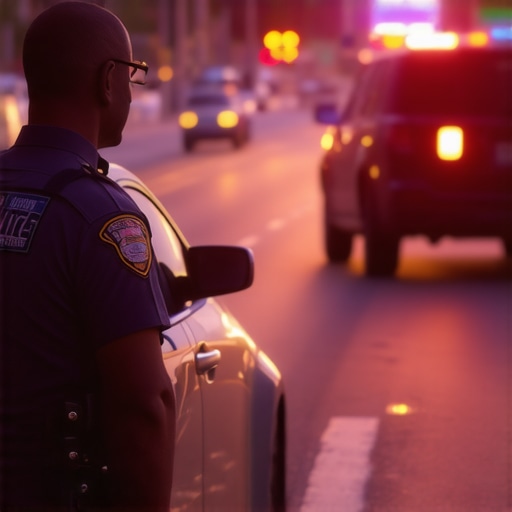
The interaction begins the moment those lights appear in your rearview mirror. The officer is not your friend. He is an agent of the state gathering evidence to strip you of your license and your freedom. He is looking for the odor of alcohol, the fumbling of a wallet, and the glassy stare of your eyes. These are subjective observations that a skilled dui lawyer can dismantle in court. We examine the dashcam footage to see if your fine motor skills actually align with the officer’s written narrative. Often, the officer writes that you fumbled your registration while the video shows a man with steady hands. That discrepancy is where we win. We look at the specific phrasing of the initial contact. Did the officer have a reasonable suspicion to pull you over, or was it a fishing expedition based on a hunch? A hunch is not enough for the Fourth Amendment. If the stop is illegal, everything that follows is the fruit of the poisonous tree and must be suppressed.
“Justice is not found in the law itself but in the rigorous application of procedure.” – Common Law Maxim
Why the breathalyzer is a fragile instrument
Breathalyzer results are frequently inadmissible due to calibration errors, mouth alcohol, or improper maintenance logs. A dui attorney will demand source code access or maintenance records to challenge blood alcohol content or BAC readings within a criminal case or administrative hearing to protect your driver’s license.
Consider the Intoxilyzer 8000 or the newer 9000 models. These are not magical truth machines; they are infrared spectrometers that can be fooled by something as simple as acid reflux or a recent burp. We zoom in on the twenty-minute observation period. The law requires the officer to watch you for twenty minutes before the test to ensure no residual mouth alcohol is present. If the officer turned his back to fill out paperwork or looked at his phone, the test is compromised. We subpoena the dry gas cylinder certificates. If the gas concentration used for calibration was off by a margin of point zero zero five, the entire batch of tests for that month is legally suspect. While most lawyers tell you to sue immediately, the strategic play is often the delayed demand for evidence to see if the state fails its discovery obligations within the statutory window. We check the temperature of the fuel cell. If the machine was kept in a vehicle without climate control, the sensors drift. A drifting sensor is a lying sensor. Your life should not be ruined by a machine that has not been serviced since the previous fiscal year.
The failure of the field sobriety test
Field sobriety tests such as the walk and turn or one leg stand are subjective evaluations rather than scientific measurements. DUI defense experts demonstrate that physical conditions, road slope, poor lighting, or officer bias invalidate the probable cause necessary for a dui arrest and legal conviction.
The National Highway Traffic Safety Administration (NHTSA) has a very specific set of rules for the three-test battery: the Horizontal Gaze Nystagmus (HGN), the Walk and Turn (WAT), and the One Leg Stand (OLS). If the officer fails to hold the stimulus twelve to fifteen inches from your face, or moves it too quickly during the HGN test, the results are garbage. The HGN test looks for the involuntary jerking of the eye. However, dozens of natural causes like caffeine, nicotine, or simple fatigue can cause nystagmus. We cross-examine the officer on his training. Did he attend the 24-hour SFST practitioner course? Does he remember the exact instructions he is required to give? If he told you to keep your hands at your sides instead of down at your sides, he deviated from the protocol. In the world of high-stakes litigation, a deviation from protocol is a gateway to a dismissal. Most defendants do not realize that these tests are designed for you to fail. They are divided attention tasks that even a sober person under extreme stress will struggle to complete. We bring in kinesiologists to testify that your inner ear infection or your back injury made the one leg stand a physical impossibility, not a sign of impairment.
“The integrity of the judicial system relies upon the strict adherence to evidentiary standards by all officers of the court.” – American Bar Association Standards for Criminal Justice
The tactical timing of the suppression motion
Suppression motions are legal filings designed to exclude evidence from a trial because of constitutional violations. A dui lawyer uses these pre-trial motions to dismiss charges or reduce penalties by proving that the arresting officer violated search and seizure laws or Miranda rights.
The real fight happens long before a jury is ever seated. We use the discovery process to bleed the prosecution’s resources. We demand the dispatch tapes, the bodycam audio, and the logs from the blood draw facility. If the nurse who drew your blood did not use a non-alcoholic swab, the sample is contaminated. We look at the vial’s expiration date. Sodium fluoride is the preservative that prevents the blood from fermenting and creating its own alcohol. If that preservative is old, your BAC reading will rise while the vial sits on a shelf. This is the forensic reality of the case. While the prosecution wants to talk about how you felt, we want to talk about the molecular stability of the evidence. Information gain is found in the technicalities. For instance, the strategic play is often to wait until the officer is on the stand to highlight the lack of a warrant for the blood draw, forcing the judge to make a ruling in the heat of the moment. We look for the ghost in the settlement conference—the piece of evidence the prosecutor knows is weak but hopes you will ignore. The final verdict on the strategy is simple: we do not accept the state’s narrative. We rewrite it through the lens of their own failures. Call an attorney who understands that a DUI case is not a moral judgment, but a procedural puzzle that can be solved with enough pressure.