The Science of Breath Test Failures and the GERD Defense
Sit down and drink your coffee. If you think that breathalyzer number is the final word on your fate, you have already lost. I have spent twenty-five years watching the state try to turn a biological glitch into a criminal conviction. They rely on the machine’s perceived infallibility. They want you to believe the Intoxilyzer is a god. It is not. It is a fallible box of sensors that can be tricked by something as common as your dinner. This is the reality of DUI defense. When you call an attorney, you are not just looking for a paper pusher. You are looking for someone who understands that the human body is more complex than a state-issued piece of plastic and wire. We are here to talk about the interference of physiology. We are here to talk about how your own stomach can betray you in the back of a patrol car. Let us look at the mechanics of this failure.
Why your stomach acid is a prosecutor’s best friend
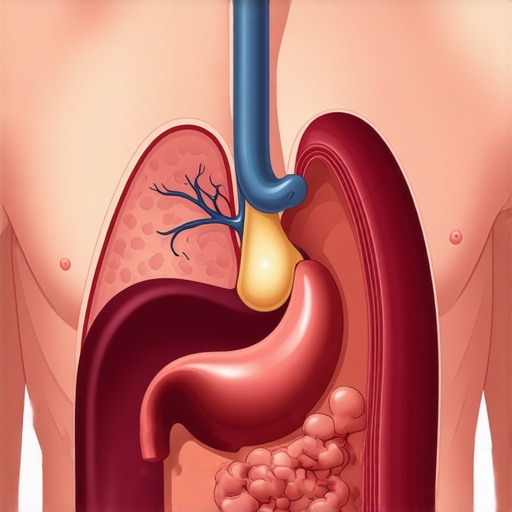
Acid reflux and Gastroesophageal Reflux Disease (GERD) create a false high BAC by allowing mouth alcohol to contaminate the breathalyzer sample. This physiological condition bypasses the slope detector, leading to a wrongful DUI arrest because the breath test measures stomach vapors instead of deep lung air during the evidential test. The breathalyzer is designed on the assumption that the air it analyzes comes from the deepest part of your lungs, the alveolar sacs. This is where the gas exchange happens. This is where the machine thinks it can calculate your blood alcohol concentration using a mathematical ratio. But when you suffer from GERD, the lower esophageal sphincter fails to close properly. This allows undigested alcohol and stomach gases to travel back up into your esophagus. When you blow into that tube, you are not just blowing lung air. You are blowing a concentrated cloud of raw alcohol from your stomach. The machine cannot tell the difference. It sees a massive spike in alcohol concentration and reports a number that is double or triple what is actually in your bloodstream. Your dui lawyer knows this. The prosecutor knows it too, but they will never admit it unless we force their hand with medical evidence and expert testimony.
The deposition disaster that cost a client their license
DUI defense depends on procedural precision and client discipline during legal testimony. A dui attorney must prevent self-incrimination because a single admission of symptoms or dietary habits can invalidate a GERD defense, leading to a guilty verdict and license revocation during the administrative license hearing or the criminal trial. I watched a client lose their entire claim in the first ten minutes of a deposition because they ignored one simple rule about silence. They felt the need to fill the air. They started explaining their dinner instead of their diagnosis. They told the opposing counsel they felt fine, while later claiming they were in the middle of a massive reflux flare-up. In the legal field, consistency is the only currency that matters. If you tell the officer you have no medical conditions, you have just handed the state a weapon to use against your own medical records later. Silence is not just a right. It is a strategic necessity. When I represent a client, we map out every word. We do not guess. We do not provide helpful context to the officer. We wait for the discovery phase where we can systematically dismantle the officer’s observation logs. The machine is only as good as the conditions of the test, and those conditions are almost always compromised.
“Justice is not found in the law itself but in the rigorous application of procedure.” – Common Law Maxim
The biological loophole in Henry’s Law
Henry’s Law governs breathalyzer accuracy by stating that volatile substances in a closed system reach equilibrium, but acid reflux disrupts this scientific principle. A dui legal expert will argue that mouth alcohol creates an unstable environment, making the breath to blood ratio of 2100 to 1 scientifically invalid for GERD patients. The law assumes your body is a perfect machine. It assumes that the temperature of your breath is exactly 34 degrees Celsius. It assumes the ratio of alcohol in your breath to alcohol in your blood is a constant. These are lies of convenience. Every human body is different. If you have a fever, the machine reads high. If you have a high hematocrit level, the machine reads high. And if you have acid reflux, the whole mathematical house of cards collapses. The alcohol sitting in your esophagus is not in equilibrium with your blood. It is a rogue variable. When you blow, the infrared light in the machine’s chamber is absorbed by this concentrated vapor. The machine calculates the absorption rate and spits out a number. It is a calculation, not a measurement. It is an estimation dressed up as a fact. Your dui attorney must be prepared to deconstruct this physics experiment in front of a jury who has been told the machine is infallible.
Why the fifteen minute observation period is a legal fiction
The deprivation period or fifteen minute observation is a mandatory protocol where a police officer must ensure no mouth alcohol contamination occurs. For those with acid reflux, this observation period is ineffective because silent reflux can occur without outward signs like belching or regurgitation, rendering the breath test results inadmissible in court. The officer sits there. He looks at his phone. He fills out the paperwork. He might glance at you once or twice. He is looking for you to vomit or put a piece of gum in your mouth. He is not looking for the microscopic movement of stomach acid into your throat. Silent reflux is exactly what it sounds like. It is invisible. It is quiet. It is devastating to the accuracy of the test. If the officer testifies that he observed you and saw nothing, we don’t call him a liar. We call him uneducated. We demonstrate that his training did not prepare him to detect the physiological reality of your condition. We look at the dashcam footage. We look for the exact moments where he looked away. Every second his eyes were not on your mouth is a second where the test’s integrity was compromised. This is how we win. We do not argue that the machine is broken. We argue that the foundation for the test never existed.
“The integrity of the forensic evidence is the bedrock upon which the right to a fair trial rests.” – American Bar Association Standards for Criminal Justice
The strategic timing of your medical record subpoena
Medical evidence is the foundational defense for challenging a breathalyzer because documented GERD or hiatal hernia provides clinical proof of potential contamination. A dui lawyer will use subpoenaed records to cross-examine the arresting officer, proving that the defendant’s physiology made a valid breath sample impossible under standard police training. Do not wait until the week before trial to mention your stomach issues. We need your history. We need the prescriptions for Omeprazole or Nexium. We need the records of your endoscopy. If we can show a chronic history of reflux, the breath test becomes a piece of fiction. We bring in a medical expert who can explain to the jury that your lower esophageal sphincter is a faulty valve. We show that for you, a breath test is not a test of your sobriety, but a test of your digestive health. The prosecution will try to say you are making it up to get out of a ticket. That is why the timeline of your medical history is foundational. A diagnosis from three years ago is a shield that the prosecutor cannot easily pierce. We don’t just tell the story. We prove it with cold, hard clinical data.
Challenging the Intoxilyzer slope detector in court
The slope detector is a software algorithm designed to identify mouth alcohol by detecting a rapid rise and fall in alcohol concentration. However, dui defense research shows that GERD-related alcohol can mimic the slope of deep lung air, causing the breathalyzer to fail in its safeguard, which requires a skilled attorney to disprove the machine’s reliability. The manufacturers of these machines claim they have solved the mouth alcohol problem. They say the slope detector can see the difference between the sharp spike of mouth alcohol and the steady curve of lung air. They are wrong. Peer-reviewed studies have shown that if the mouth alcohol is introduced throughout the breath or in certain concentrations, the detector is blind to it. It is an algorithm, and every algorithm has a failure rate. We demand the COBRA data. We demand the internal logs of the machine. We look for the raw data that the machine used to make its calculation. Often, we find that the machine was on the verge of flagging an error but pushed through a number anyway. This is the forensic psychology of litigation. We turn the machine’s own data against the state’s narrative.
Final Strategic Considerations
The legal strategy for a DUI case involving acid reflux requires aggressive litigation and a deep understanding of biology. You must call an attorney who treats the breath test as a rebuttable presumption rather than an absolute fact to protect your rights and avoid a conviction based on flawed forensic science. If you are standing on the side of the road and you feel that burn in your chest, the test is already rigged against you. The officer’s job is to build a case for the prosecution. My job is to deconstruct it. We do not accept the state’s version of reality. We do not accept that a blinking number on a screen defines who you are. We look at the calibration logs. We look at the officer’s training records. We look at your medical history. We build a wall of evidence that the prosecution cannot climb over. The courtroom is a place of procedure and evidence. If the procedure was flawed and the evidence is tainted by your own stomach acid, then there is no case. That is the brutal truth of the law. We find the error. We exploit the error. We win.