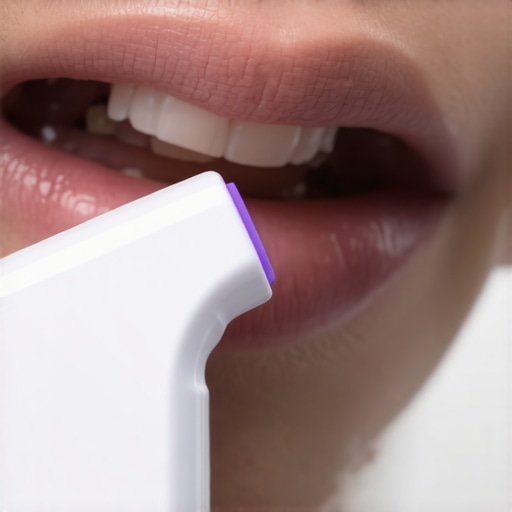
The Physics of Wrongful Arrest and the Mouth Alcohol Trap
I sit here with a cup of black coffee that is as bitter as the truth most defendants refuse to hear. You think the machine is your friend because it has a digital readout and a government sticker on the side. You are wrong. The courtroom is a theater of precision and the machine you blew into is a flawed protagonist. It does not measure your blood. It measures a guess. It calculates a mathematical ghost based on an assumption that your body is a perfect closed system. It is not. Your mouth is a cavern of variables. Your stomach is a reservoir of potential evidence destruction. If you have been arrested, you need to understand that the machine did not catch you. The machine failed you. This is the reality of the dui legal landscape. It is not about what you drank. It is about how the machine interpreted the vapor in your throat.
The myth of machine infallibility
Mouth alcohol contamination occurs when the breathalyzer detects ethanol trapped in the oral cavity instead of deep lung air from the alveolar sacs. This error happens because the device assumes a 2100 to 1 partition ratio between blood and breath. A dui lawyer can prove this ratio is a scientific average that rarely applies to individual human physiology. I watched a client lose their entire claim in the first ten minutes of a proceeding because they ignored one simple rule about silence. They tried to explain away the smell. They tried to be helpful. In doing so, they admitted to a timeline that validated the machine’s error. Never help the state build a cage for you. The machine is a tool of the prosecution, not a neutral arbiter of facts. It uses infrared spectroscopy to identify molecules. It sees the methyl group. It does not know if that molecule came from your blood or from a piece of bread trapped in your bridge work. The machine is a binary idiot. It sees a number and the officer sees a promotion. You see a cell.
“Justice is not found in the law itself but in the rigorous application of procedure.” – Common Law Maxim
The science of partition ratios
Partition ratios are the mathematical foundation of every breath test result used in a dui defense case. The machine assumes that for every 2100 milliliters of breath, there is one milliliter of blood alcohol. This is a massive generalization. Human beings vary between 1500 to 1 and 3000 to 1 depending on body temperature, hematocrit levels, and the phase of alcohol absorption. If you are in the absorptive phase, the machine will overestimate your true blood alcohol by as much as thirty percent. This is not a glitch. This is the design. When you call an attorney, the first thing they should look at is the slope detector data. If the machine did not detect a rapid change in alcohol concentration, it might have missed the mouth alcohol spike entirely. The law treats these machines like holy relics. They are actually just expensive calculators with bad sensors. We fight the math to save the person. We expose the variance to create the doubt. A high temperature or a fever can also spike the reading. Every degree Celsius above normal increases the result by nearly seven percent. The machine does not ask if you have the flu. It just prints a ticket to jail.
Residual vapors and the false positive
Residual alcohol stays in the mouth for up to twenty minutes after the last sip or the last bout of regurgitation. This vapor is thousands of times more concentrated than the air coming from your lungs. The machine is designed to detect a plateau in the breath sample, but it often fails to distinguish between the cooling of the breath and the presence of concentrated vapor. This is why you need a dui attorney who understands the technical manuals of the Intoxilyzer and the Alcotest. These devices are sensitive to ambient air, radio frequency interference, and even the chemical composition of your last meal. If you have a dental crown or a periodontal pocket, alcohol can hide there. It sits. It waits. Then, when you blow, it hitches a ride on your breath and ruins your life. This is not speculation. This is forensic reality. I have seen cases where a simple burp three minutes before the test resulted in a reading double the legal limit. The officer will say they watched you. They were probably looking at their phone or filling out the paperwork. They were not watching the silent movement of your diaphragm.
“The reliability of scientific evidence depends entirely on the integrity of the collection process.” – American Bar Association Standards
The failure of the observation period
Deprivation periods are the only safeguard the state offers against mouth alcohol, yet they are the most frequently ignored procedural requirement in dui legal history. The officer is required to observe the subject for a continuous fifteen to twenty minutes to ensure nothing is put in the mouth and no burping occurs. Real life does not work like a textbook. Officers get distracted. They talk to colleagues. They look at the computer. A single micro-reflux event, often silent and invisible, can contaminate the entire sample. We look for the gaps in the video. We look for the moments where the officer’s head turned away. If the observation was not continuous, the test is scientifically invalid. It is a house of cards. One gust of procedural truth and the whole case falls. Most people think they are stuck with the number. They are only stuck if they accept the state’s narrative. We reject it. We demand the logs. We demand the maintenance records. We demand the proof that the officer actually did their job instead of just going through the motions.
Why medical conditions trigger false arrests
Gastroesophageal Reflux Disease or GERD is the silent killer of breath test accuracy. This condition allows stomach acid and alcohol vapors to travel back up the esophagus and settle in the mouth. For a person with GERD, a breath test is a trap they cannot avoid. The machine cannot tell the difference between deep lung air and stomach gas. It is a physiological impossibility for the sensors used in modern police stations. If you suffer from heartburn or acid reflux, your dui defense must center on your medical history. We bring in experts. We show the jury how your body betrayed you. We explain the science of the lower esophageal sphincter. It is a gruesome, detailed process, but it is necessary. The state wants to simplify your life down to a decimal point. We refuse to let them. We expand the story until the jury sees the machine for the flawed tool it is. Low carb diets and diabetes can also produce ketones which the machine confuses for ethanol. You could be stone cold sober and blow a point one five if your body is in ketosis. The machine does not care about your diet. It only cares about the infrared light.
Tactical movements for the defense
Motion to suppress is the most powerful weapon in the arsenal of a dui attorney. We do not wait for the trial to win. We win by removing the evidence before the jury ever sees it. If we can prove mouth alcohol contamination, the test results may be thrown out entirely. This leaves the state with nothing but the officer’s subjective opinion. Opinions are easy to dismantle. Hard data is harder, but only if that data is valid. We attack the source. We attack the calibration. We attack the storage of the gas canisters used to check the machine. Everything is a target. The legal system is a game of leverage. If you have the data, you have the lead. If you have the truth about mouth alcohol, you have a chance at freedom. Do not settle for a plea deal because you are scared of a number. That number is a lie. Call a professional who knows how to expose it. We look at the dry gas standards. We look at the diagnostic checks. If the machine failed to reset the zero reference, the whole night’s work is garbage. We treat it as such. We are not here to make friends with the prosecutor. We are here to win. The coffee is cold now. The case is just beginning. We move with purpose. We move with the facts. We do not stop until the science is settled in your favor.