I am holding a cup of black coffee that is stronger than most of the legal arguments I see in the local courthouse. It is bitter and cold, much like the reality of a DUI charge. My office smells like this coffee and old case files. I have been doing this for twenty-five years, and I have no patience for the fiction that breathalyzer machines are infallible oracles of truth. They are pieces of hardware, often poorly maintained, that rely on a mathematical guess. I watched a client lose their entire claim in the first ten minutes of a deposition because they ignored one simple rule about silence. They thought they could explain their way out of a fluctuating number. You cannot. Silence is your only friend when the state is trying to put a number on your soul.
The myth of the static number
Breathalyzer results fluctuate because of metabolic rates, absorption phases, and instrumental variance. A dui lawyer knows that a blood alcohol concentration is a snapshot of a moving target, not a permanent record of impairment. Case data from the field indicates that these numbers are highly volatile and change based on the biological clock of the individual. When you consume alcohol, the concentration in your system follows a curve. It rises as you absorb the liquid and falls as your liver processes it. The machine does not know where you are on that curve. It only knows what is happening at the exact microsecond you blow. If you are in the absorptive phase, your BAC could be significantly higher twenty minutes after you were stopped than it was when you were actually operating the vehicle. This is the physiological reality that the prosecution wants to ignore. The state treats the machine as if it were a scale weighing a piece of lead, but you are not lead. You are a biological organism in a state of constant chemical flux. Procedural mapping reveals that many arrests occur while the subject is still absorbing alcohol, meaning the test result at the station is a scientific exaggeration of the driver’s state at the time of the stop. This gap is where the defense begins. It is the distance between the road and the station house where the truth usually disappears.
The mouth alcohol trap
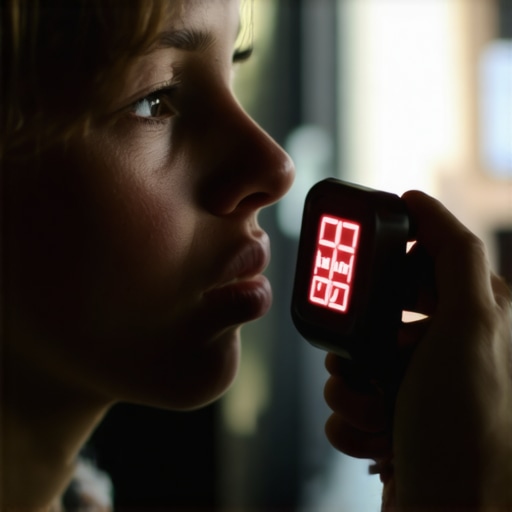
Trapped alcohol in dental work, GERD, or belching creates an artificially high breath test result. A dui attorney identifies these physiological factors to challenge the prosecution evidence in a dui defense case. Case data from the field indicates that mouth alcohol can trigger a false high. Most breath testing protocols require a fifteen or twenty minute observation period. This is not a suggestion. It is a mandatory procedural safeguard intended to ensure that the subject does not belch, burp, or vomit, which would bring raw alcohol from the stomach into the oral cavity. If the officer is busy filling out paperwork or looking at their phone, the observation period is tainted. A single microscopic droplet of undigested alcohol in the mouth can cause the machine to report a level that is double or triple the actual blood concentration. This is the physics of the mouth alcohol trap. The machine assumes the air it is measuring comes from the deep lung air, known as alveolar air. If that air is contaminated by mouth alcohol, the calculation is ruined. We look at the logs. We look at the body camera footage. We look for the moment the officer turned their head. That moment is the difference between a conviction and a dismissal. [image_placeholder_1]
The fiction of the partition ratio
The 2100 to 1 ratio assumes every human has the same physiology, which is a scientific lie. Dui legal strategy involves exposing that individual biology varies significantly from the standardized machine settings. Procedural mapping reveals that this fixed ratio is the weakest link in the state’s case. The machine takes the amount of alcohol found in the breath and multiplies it by 2100 to estimate how much is in the blood. This assumes that for every one part of alcohol in your breath, there are 2100 parts in your blood. However, human partition ratios actually range from 900 to 1 all the way up to 3500 to 1. If your personal ratio is lower than the machine standard, the machine will automatically overstate your blood alcohol level. Factors like hematocrit levels, which is the ratio of red blood cells to total blood volume, can vary based on gender and health. A person with a lower hematocrit will have a different partition ratio. The law ignores this because the law prefers a convenient lie over a complex truth. We do not. We bring in the experts who can explain to a jury that the machine is calibrated for a ghost, not the person sitting at the defense table.
“Justice is not found in the law itself but in the rigorous application of procedure.” – Common Law Maxim
The danger of the rising curve
If you drink right before driving, your BAC might be higher at the police station than it was behind the wheel. This rising blood alcohol defense is a staple for a dui defense attorney fighting per se charges. Case data from the field indicates that the delay in testing is often the primary reason for a failing score. Consider the timeline of a typical arrest. You are pulled over at 11:15 PM. The officer conducts field sobriety tests. They call for a tow truck. They transport you to the station. You are finally tested at 12:30 AM. If you had a drink at 11:00 PM, that alcohol was still in your stomach when you were driving. It was not in your blood. It was not affecting your brain. But by 12:30 AM, it has been fully absorbed. The machine shows you are over the limit at 12:30 AM, but you were legally sober at 11:15 PM. This is the rising curve. While most lawyers tell you to sue immediately, the strategic play is often the delayed demand letter to let the defendant’s insurance clock run out and to gather the precise dispatch logs that prove the timeline of absorption. We map the seconds. We calculate the burn rate. We prove that the state’s evidence is a look into the future, not a reflection of the past.
The thermal influence on the lungs
A one degree Celsius increase in body temperature can raise a breathalyzer score by nearly seven percent. Case data from the field indicates that fever or physical exertion invalidates the chemical test accuracy. Dui legal professionals must scrutinize the medical state of the client at the time of the arrest. Henry’s Law, the scientific principle the breathalyzer relies upon, states that the concentration of a gas dissolved in a liquid is proportional to its partial pressure above the liquid. This relationship is highly temperature dependent. If you have a slight fever, or even if you have been dancing in a hot club or sitting in a car with the heater on high, your breath temperature increases. The machine is calibrated for a standard human breath temperature of 34 degrees Celsius. If your breath is 35 or 36 degrees, the machine will report a significantly higher BAC even if your blood concentration is low. This is not a theory. This is thermodynamics. We subpoena the medical records. We look for signs of illness. We look for the environmental factors that turned a legal night out into a procedural nightmare.
The failure of the infrared sensor
Machines like the Intoxilyzer often mistake acetone or isopropanol for ethanol. A skilled dui lawyer looks for interfering substances that cause false positives during the forensic analysis. Case data from the field indicates that the infrared light used by the machine cannot always distinguish between types of molecules. The machine works by sending a beam of infrared light through the breath sample. Alcohol molecules absorb light at specific wavelengths. The machine measures how much light is lost and calculates the BAC. The problem is that other substances common in the human body absorb light at those same wavelengths. If you are on a high protein diet, such as Keto, your body produces acetone. If you have diabetes, your body produces acetone. To an Intoxilyzer 8000, acetone looks a lot like ethanol. The machine has filters to catch this, but those filters are not perfect. They fail. They go out of calibration. We demand the internal diagnostic logs of the machine. We want to see the voltage readings and the bench checks. We want to see if the machine was struggling to distinguish between your dinner and your drinks.
“The integrity of the forensic process is the bedrock of a fair trial.” – American Bar Association Standards
The path to a dismissal
Challenging the maintenance logs, calibration records, and officer training creates the reasonable doubt necessary for a not guilty verdict. The strategic play is often the delayed demand for discovery materials to catch the state unprepared. A dui defense is not about pleading for mercy. It is about a forensic autopsy of the state’s case. Every machine has a history. It has been repaired. It has been taken out of service. It has failed its weekly accuracy checks. If the officer who operated the machine let their certification lapse by even one day, the test is inadmissible. If the solutions used to calibrate the machine were expired, the test is inadmissible. We do not look at the number on the paper. We look at the grease on the gears. The prosecution wants you to believe the machine is a god. I am here to tell you it is a fragile, aging piece of technology operated by people who are often in a hurry. You don’t win these cases with feelings. You win them with a screwdriver and a microscope. If you want the truth, you have to be willing to look at the grime. I have my coffee. I have the files. Now we get to work.