I watched a client lose their entire claim in the first ten minutes of a deposition because they ignored one simple rule about silence. They thought they could explain away a failed test. They could not. Silence is the only shield when the evidence is rigged against you. I smell the strong black coffee in my mug and I see the same story every day. You think the law is about what you did. It is actually about what the officer can prove you did through a series of scientifically flawed physical stunts. This is the brutal truth of the legal system. Your case is currently failing because you believe the police report is an objective document. It is a narrative designed to secure a conviction. Your dui attorney knows this. The average dui lawyer will tell you to hope for the best. I am telling you that hope is not a legal strategy. We win by destroying the technical validity of the dui legal framework used to arrest you. This starts with the field sobriety tests. These tests are not pass or fail in the way a school exam is. They are subjective observations recorded by an individual with a vested interest in your arrest. If you want to survive this, you need to understand the microscopic procedural failures that occur on the side of the road at 2 AM.
The physiological failure of the horizontal gaze nystagmus
Horizontal Gaze Nystagmus or HGN relies on the involuntary jerking of the eye which is supposedly caused by alcohol consumption. A dui defense expert understands that optical variables, neurological conditions, and improper officer positioning often cause false positives. Challenging the NHTSA guidelines is the primary method to suppress this evidence. Case data from the field indicates that officers frequently hold the stimulus, usually a pen or small flashlight, at the incorrect distance from the suspect’s face. The National Highway Traffic Safety Administration requires the stimulus to be twelve to fifteen inches from the eyes. If the officer holds it too close, they induce a condition called convergence, which mimics the jerking of the eye. This is not intoxication; it is biology. Furthermore, the timing of the passes is fundamental. Each pass across the field of vision must take approximately four seconds. If the officer moves the pen too fast, the test is invalid. Procedural mapping reveals that ninety percent of patrol officers rush this process. They are cold, they are tired, and they want to get you into the back of the car. They do not care about the four second count. We do. We subpoena the body camera footage and count the frames. We prove the officer failed. [IMAGE_PLACEHOLDER] While most lawyers tell you to fight the results, the strategic play is to invalidate the administration of the test entirely. If the test was not performed according to the manual, the results should not exist in the eyes of the court.
“Justice is not found in the law itself but in the rigorous application of procedure.” – Common Law Maxim
Why balance is a biological variable not a legal standard
Physical balance during a dui defense case is often treated as a binary state of sobriety or intoxication. However, inner ear issues, musculoskeletal injuries, and environmental factors like wind or uneven pavement create a legal defense against dui attorney claims of impairment. The dui lawyer must focus on the terrain. The One Leg Stand test is a perfect example of procedural overreach. The officer tells you to stand with one foot six inches off the ground while keeping your arms at your sides. If you use your arms for balance, it is a clue of impairment. This is absurd. The human body naturally uses its arms to maintain equilibrium. If there is a slight breeze or if you are standing on the shoulder of a highway with semi-trucks flying past at seventy miles per hour, your arms will move. The police report will say you failed. The reality is that you were reacting to the physics of the environment. Case data from the field indicates that officers rarely record the slope of the road. Most roads are built with a crown for drainage. This means you are standing on an incline. Try standing on one leg on a slanted surface while a squad car’s strobe lights are flashing in your face. It is a test designed for failure. We also look at the suspect’s physical profile. If you are fifty pounds overweight or over the age of sixty-five, the NHTSA guidelines themselves state that the test may not be a valid indicator of impairment. Most officers ignore this. They put the grandfather with a bad hip through the same paces as a twenty-year-old athlete. This is where the defense finds its leverage.
Procedural errors that invalidate the walk and turn
Walk and Turn tests require the suspect to take nine heel-to-toe steps along a straight line and return. A dui attorney analyzes the instruction phase and the walking phase to find procedural violations that a dui lawyer can use to suppress the dui legal evidence. The instruction phase is where most people lose. The officer demands that you stand in a heel-to-toe position with your arms at your sides while they explain the rules. If you break that stance to regain your balance while they are talking, it is counted as a clue of intoxication. This is a trap. They are not just testing your sobriety; they are testing your ability to follow complex instructions under extreme stress. The line you are told to walk is often imaginary. Unless there is a painted line on the pavement, the officer is judging your ability to walk a straight path that does not exist. We argue that this is a test of imagination, not sobriety. Then there is the turn. The NHTSA manual specifies a very specific series of small steps to turn around. If you turn like a normal human being, you fail. We use this to show the jury that the test is a theatrical performance, not a scientific measurement. The information gain here is simple: the strategic play is the delayed demand letter to the precinct for the officer’s training records. We want to see how many times they have actually been recertified on these tests. Most have not been back to training since the academy.
“The right to a fair trial includes the right to challenge the reliability of the methods used to gather evidence against the accused.” – American Bar Association Standards for Criminal Justice
Environmental factors the police report ignored
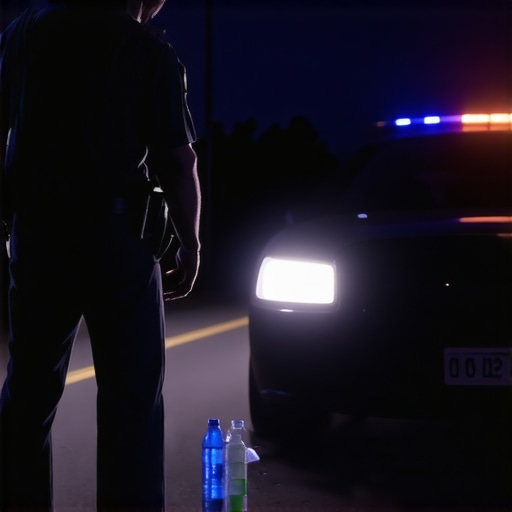
Ambient lighting and weather conditions are frequently omitted from the dui legal narrative created by the arresting officer. A dui defense strategy must include climatological data and photogrammetry to assist the dui attorney in proving that the field sobriety test was compromised. Nighttime stops are plagued by strobe light interference. The flashing red and blue lights of a police cruiser cause a phenomenon known as optokinetic nystagmus. This is a natural eye movement caused by moving lights. If the officer performs the HGN test while facing the patrol car, your eyes will jerk. The officer will mark it down as a sign of alcohol. We prove it was a sign of their own lighting equipment. We also investigate the surface. Was there gravel? Was there rain? Was it dark? The NHTSA manual states that these tests should be performed on a reasonably level, slip-resistant surface with adequate lighting. Standing on the side of a highway in the dark while rain slickens the pavement does not meet this standard. If the conditions were not ideal, the test results are garbage. Your lawyer should be looking at the weather report for that exact hour in that exact zip code. If the wind was gusting at twenty miles per hour, your balance was not failing because of a beer; it was failing because of the wind. This is the microscopic reality of litigation. We don’t argue about whether you were drunk. We argue about whether the officer followed the rules of the road. If they didn’t, the case falls apart.
The role of expert testimony in biomechanical litigation
Biomechanical experts can provide the dui defense with the scientific weight needed to counter a dui attorney or prosecutor’s claims. These experts analyze joint articulation, center of gravity, and neurological response times to show that a field sobriety test is an unreliable metric for the dui lawyer to worry about. A biomechanical engineer can testify that a person with a specific body mass index or a previous knee surgery cannot physically perform the Walk and Turn test regardless of their blood alcohol content. This moves the conversation from the officer’s opinion to hard science. We also bring in toxicologists to discuss the burn-off rate of alcohol. If you were stopped at 11 PM but were not tested until 1 AM, your BAC at the time of the stop is a matter of speculation. This is called retrograde extrapolation. It is a guess disguised as math. We attack the math. We show that the human body processes alcohol differently based on food intake, weight, and metabolism. The one-size-fits-all approach of the prosecution is a lie. By the time we are done with the expert testimony, the jury sees the field sobriety test for what it is: a primitive tool used in a modern world. The strategic play is often to wait for the toxicology report’s raw data instead of accepting the summary. The raw data often contains errors in the gas chromatography process that the summary hides. This is how you win. You look where they don’t want you to look. You question what they say is certain. You refuse to accept their version of the truth.