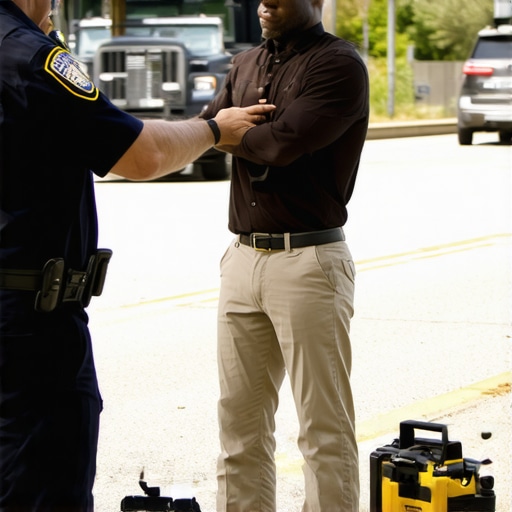
I smell like strong black coffee and the sharp acidity of a morning spent reviewing dashcam footage that makes my eyes ache. I am going to tell you something you do not want to hear: your case is failing. It was failing the moment you stepped out of your vehicle. I watched a client lose their entire claim in the first ten minutes of a deposition because they ignored one simple rule about silence and instead tried to justify their performance on a balance test they were never meant to pass. Most drivers believe the roadside evaluation is a fair test of physical coordination. It is not. It is a structured search for failure points. A dui attorney knows that these evaluations are subjective observations dressed in the lab coat of science. If you believe the officer was an impartial judge of your sobriety, you have already lost. The reality is that the decision to arrest is often made before you even begin the first task. To win, a dui lawyer must dissect the interaction with surgical precision, looking for the moment the officer stopped observing and started confirming their own bias.
The myth of the objective officer
Dui defense hinges on the fact that law enforcement officers are human beings subject to confirmation bias and procedural errors during the roadside sobriety evaluation process. Case data from the field indicates that once an officer smells alcohol or sees bloodshot eyes, their brain shifts from investigation to evidence collection. They are no longer looking for signs of sobriety. They are looking for the eight clues of the Walk and Turn test. This is the procedural mapping of a conviction. While most lawyers tell you to sue immediately, the strategic play is often a delayed demand for the officer training records to see if they actually understood the NHTSA manual they claim to follow.
“Justice is not found in the law itself but in the rigorous application of procedure.” – Common Law Maxim
The officer is a witness, not a machine. Their fatigue, their desire to hit a quota, and their personal history with dui legal matters all bleed into the report they write at 3 AM. If the report says you swayed but the video shows you stood like a statue, that is the crack in the foundation we use to bring the whole house down.
The biological failure of the eye test
Horizontal Gaze Nystagmus is an involuntary jerking of the eye that an attorney must challenge because it is often influenced by environmental factors, medical conditions, and improper testing distance. Procedural mapping reveals that the HGN test is the most scientific of the big three tests, which also makes it the most prone to officer error. The officer must hold the stimulus exactly twelve to fifteen inches from your face. They must move it at a specific speed. If they move it too fast, they induce the very jerking they are looking for. They call it nystagmus; I call it a botched procedure. There are over forty different types of nystagmus that have nothing to do with alcohol. These include inner ear issues, caffeine consumption, or even the strobe effect of the police cruisers flashing lights. When you call an attorney, the first thing we do is compare the timing of the stimulus movement on the video against the NHTSA standards. If the officer took three seconds instead of four, the test result is scientifically void. The gaze test is a biological minefield where the officer is holding the map upside down.
Physical gymnastics in a high pressure environment
The Walk and Turn and One Leg Stand are divided attention tasks that a dui attorney can easily discredit by citing poor road conditions, inappropriate footwear, and the stress of the stop. Most people cannot perform these tests perfectly in a quiet gym wearing sneakers, yet the police expect you to do them on the side of a highway with semi-trucks screaming past at seventy miles per hour. The asphalt is rarely level. The wind is often blowing. You are being asked to balance while your adrenaline is spiking and a man with a gun is staring at you. A dui lawyer knows that the NHTSA standards require a dry, hard, level, and non-slippery surface. If there is gravel, or if the road has a five-degree slope for drainage, the test is invalid. We look for the micro-movements. Did you lift your arms for balance because you were intoxicated, or because a gust of wind hit you? The officer will write down the former every single time. My job is to prove the latter through forensic meteorology and topographical data of the arrest site.
Digital evidence that contradicts the police report
Body worn cameras and dash cam recordings provide a neutral record that a dui lawyer uses to expose officer exaggeration and omissions in the police report. The report is a narrative written to satisfy a supervisor and a prosecutor. It is a piece of creative writing. The video is the truth. I have seen reports that claim a driver was stumbling and slurring, only for the video to show a person speaking clearly and walking with a steady gait. The contrast is the leverage.
“The integrity of the judicial system depends on the transparency of the evidence gathered at the scene of the alleged crime.” – American Bar Association Journal
When the digital record contradicts the written word, the officer’s credibility evaporates. This is why you must call an attorney who is willing to watch every second of the footage, not just the highlights. We look for the gaps. We look for when the officer turns off the audio. We look for the instructions they forgot to give. If the officer fails to tell you to keep your arms at your sides, they cannot legally count it as a clue when you move them. The devil is not just in the details; the devil is in the timestamps.
The limits of police certification
A dui attorney must aggressively cross-examine the officer training history to demonstrate that field sobriety test certification does not equal scientific expertise in toxicology or physiology. Officers attend a three-day course and suddenly believe they are experts in human biology. They are not. They are technicians who have been taught to follow a checklist. If they skip a step on that checklist, the entire evaluation loses its probative value. Case data from the field indicates that many officers have not been recertified in years. They develop bad habits. They take shortcuts. They start to rely on their gut feeling rather than the standardized clues. When we get them on the stand, we ask them to define the exact angle of onset for nystagmus. We ask them to explain the physiological cause of the jerking. When they cannot answer, the jury sees that the expert in the room is not the man in the uniform. The strategic play is to turn the officer’s supposed expertise into a liability by holding them to the very standard they claim to uphold but rarely do.
Why the police manual is your defense weapon
The NHTSA Student Manual is the procedural bible for dui legal challenges, and any deviation from its instructions can lead to the suppression of evidence. The manual explicitly states that if any of the elements of the standardized field sobriety tests are changed, the validity is compromised. This is a binary reality. There is no such thing as close enough in a dui defense. If the officer told you to start the test before they finished the instructions, that is a violation. If they didn’t ask if you had any physical injuries that would prevent you from balancing, that is a violation. We use the manual to trap the officer. We ask them if the manual is the gold standard. They have to say yes. Then we show the video where they ignored the manual. This creates a logical paradox for the prosecution. Either the manual is the standard and the officer failed, or the officer is the standard and the tests are meaningless. Either way, the dui attorney wins the point. Litigation is about narrowing the path for the opposition until they have nowhere to go but a dismissal or a reduced charge.
Forensic analysis of the arrest process
Dui legal strategy requires a comprehensive audit of the entire timeline, from the initial traffic stop to the final breathalyzer test, to identify constitutional violations. The roadside evaluation is just one segment of the timeline. Was the initial stop even legal? If the officer stopped you for weaving within your lane, and the state law requires you to actually cross the line, the entire stop is fruit of the poisonous tree. A dui lawyer looks for the information gain in the silence. While the officer is waiting for the dispatch to return your plate information, are they illegally prolonging the stop to conduct a drug dog sniff or a sobriety check? Every second of the detention must be justified by reasonable suspicion. If the suspicion for the stop was a broken taillight, the officer cannot transition to a dui investigation without new, articulable facts. Smelling alcohol is often the go-to excuse, but as any dui attorney will tell you, the smell of alcohol is not the same as the smell of impairment. You can drink a beer and drive a car legally in this country. The officer’s job is to prove impairment, and our job is to show that their methods are too biased and broken to prove anything at all.