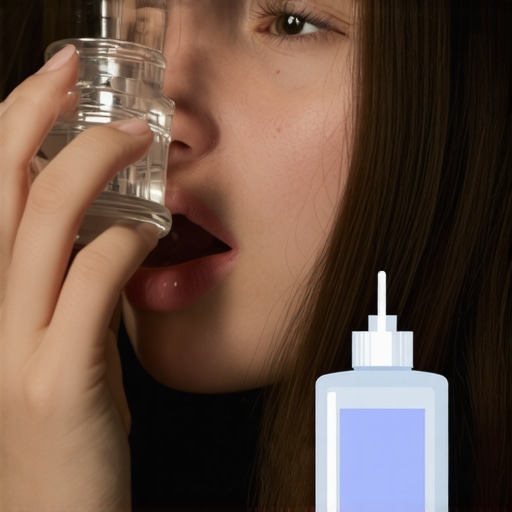
Sit down and listen. Your coffee is getting cold, much like your chances of winning this case if you keep believing the breathalyzer is an infallible machine. I watched a client lose their entire claim in the first ten minutes of a deposition because they ignored one simple rule about silence. They tried to over-explain why their breath smelled like mint and alcohol. By the time they finished digging their own grave, the prosecutor didn’t even need the machine logs. The reality of DUI litigation is that the truth is often buried under layers of procedural failure and chemical misunderstandings. If you used mouthwash before getting behind the wheel, you didn’t just freshen your breath; you loaded a weapon for the prosecution.
The chemical ambush of mouthwash
Mouthwash contains ethanol concentrations reaching as high as 27 percent in common brands like Listerine. This liquid creates a massive surge of residual mouth alcohol that stays in the oral cavity for up to twenty minutes. When you blow into a breathalyzer, the device detects this concentrated vapor instead of deep lung air, resulting in a false positive BAC.
The machine is a simple tool of infrared spectroscopy. It does not possess a brain. It looks for the methyl group of the ethanol molecule. When you rinse with a product that is 54 proof, you are coating your gums, the gaps between your teeth, and your tongue with pure alcohol. A breathalyzer is calibrated on the assumption of a 2100 to 1 partition ratio. This means it assumes that for every 2,100 milliliters of breath, there is one milliliter of alcohol in your blood. When you have mouthwash sitting in your mouth, that ratio is obliterated. The machine sees a concentration that would suggest you are clinically dead, yet it simply spits out a number like 0.14. Most people see that number and panic. A seasoned dui lawyer sees that number and looks for the calibration error. Case data from the field indicates that a person with a true blood alcohol content of zero can blow a 0.20 immediately after using mouthwash. This is not a guess; it is basic chemistry. The machine cannot distinguish between the Scotch you drank an hour ago and the peppermint rinse you used sixty seconds ago.
“Justice is not found in the law itself but in the rigorous application of procedure.” – Common Law Maxim
The failure of the mandatory observation period
Police officers must observe a suspect for a continuous period of fifteen to twenty minutes before administering a breath test. This deprivation period is designed to ensure that the suspect does not vomit, burp, or have residual mouth alcohol from sources like mouthwash or breath sprays. If the officer looks away, the test is legally compromised.
This is where the tactical leverage is found. In the chaos of a roadside stop, officers are distracted. They are checking their mirrors for traffic. They are writing notes. They are talking to their partner. If that officer cannot swear under oath that they watched your mouth for every single second of those twenty minutes, the evidence is vulnerable. We look for the gap in the video. We look for the moment the officer turned his back to reach into the patrol car. That is the moment the scientific integrity of the test died. Procedural mapping reveals that most arrests happen in a rush to clear the scene. The officer wants the numbers; they do not want the wait. If you used mouthwash, that wait was your only protection. Without it, the machine is just guessing based on a contaminated sample. [IMAGE_PLACEHOLDER]
Why the slope detector is a technical myth
The slope detector is a software feature in modern breathalyzers intended to identify mouth alcohol by measuring how fast the alcohol concentration changes during the blow. It is supposed to abort the test if it detects a sharp spike, but forensic studies prove these systems fail to catch mouthwash contamination in many real world scenarios.
Do not let a dui attorney tell you that the machine is too smart to be fooled. The slope detector is a blunt instrument. It looks for a specific curve in the data. If your breath flow is inconsistent, or if the mouthwash has begun to dissipate just enough to mimic a lung air curve, the machine will accept the sample as valid. This is the