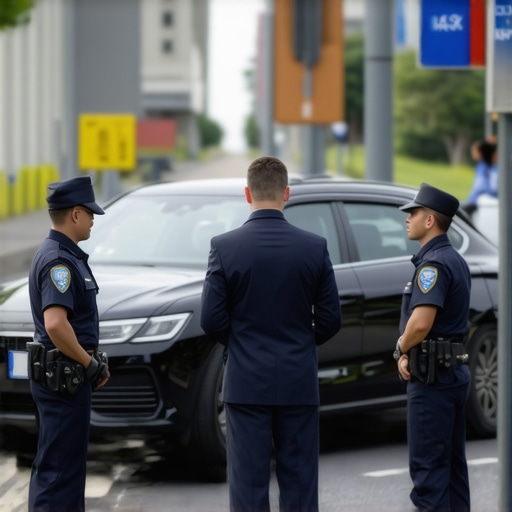
You are standing on the side of the road and your car is on a flatbed. You think you can talk your way out of this. You cannot. I smell the burnt coffee in my cup and the ozone of the city air, and I see another client about to make a fatal mistake. Your car is not just a vehicle now; it is evidence, it is leverage, and for the state, it is a potential paycheck. Most people think they have rights that the police actually took away thirty minutes ago through a series of tactical questions you were too nervous to deflect.
I watched a client lose their entire claim in the first ten minutes of a deposition because they ignored one simple rule about silence. He thought he could explain why he was behind the wheel. He thought he could justify the smell of alcohol or the erratic lane change. By the time he stopped talking, he had admitted to the DUI legal elements that guaranteed his car seizure would be permanent. He handed the prosecution a conviction on a silver platter because he feared the quiet. Silence is your only shield, yet you discard it first.
The statutory trap of the ten day window
Law enforcement agencies utilize civil asset forfeiture to seize private property during a DUI arrest. You must file a verified claim within ten days to prevent a default judgment. Failure to act within this statutory timeframe allows the government to sell your vehicle at auction or keep it for official use.
The law moves with a cold, mechanical precision that ignores your personal life. When the police take your car, they are operating under a set of administrative codes that run parallel to your criminal case. This is a dual-front war. On one side, you have the criminal charges where you are presumed innocent. On the other side, the civil forfeiture case treats your car as the defendant. In the eyes of the court, the vehicle itself is guilty of being involved in a crime. If you do not hire a dui attorney to file the Notice of Claim immediately, you are essentially forfeiting your equity. The police do not have to prove you were guilty beyond a reasonable doubt in a civil forfeiture hearing; they often only need preponderance of the evidence. This lower burden of proof is the prosecution‘s favorite weapon. They will wait for you to miss the filing deadline while you are distracted by your arraignment. Do not let the clock run out. The legal system does not reward the slow.
“Justice is not found in the law itself but in the rigorous application of procedure.” – Common Law Maxim
The mechanics of the inventory search loophole
Police officers perform an inventory search of every impounded vehicle to document valuables. This administrative procedure allows them to bypass the Fourth Amendment requirement for a search warrant. Any contraband or evidence found during this inspection will be used against you in a criminal trial.
This is where the procedural zooming becomes vital for your dui defense. The Supreme Court has ruled in cases like South Dakota v. Opperman that police may search a car without a warrant if it is being impounded for community caretaking. However, this search must follow a strictly standardized departmental policy. If the officer decides to open a sealed container or rip up floor mats without a specific written policy mandating it, the evidence might be suppressed. Your dui lawyer must demand the Standard Operating Procedure (SOP) manual from the arresting agency. We look for the microscopic failure. Did the officer list the spare tire? Did they document the loose change? If the inventory was sloppy, the search was likely a pretext for a warrantless criminal search. While most lawyers tell you to sue immediately, the strategic play is often the delayed demand letter to let the defendant’s insurance clock run out or to catch the officer in a contradiction during the preliminary hearing. Information gain in these cases comes from the discrepancy between the arrest report and the tow sheet.
Why the prosecution loves your car more than you
The District Attorney views your vehicle as collateral for fines and court costs. A seized car provides leverage during plea negotiations. The prosecutor may offer to return the car in exchange for a guilty plea on a misdemeanor DUI, effectively using your property to coerce a conviction.
It is a business transaction for the state. They know that without your car, you cannot get to work, you cannot take your children to school, and you cannot meet with your legal counsel easily. They want you desperate. They want the storage fees at the private impound lot to stack up until the debt exceeds the value of the car. In many jurisdictions, the tow company is in a revenue-sharing agreement with the municipality. This is a predatory ecosystem. You need to call an attorney who understands the lien laws. If your car was seized, check your loan agreement. Most financing contracts have a default clause if the vehicle is impounded for criminal activity. The bank can repossess the car right out of the police lot, which might actually be your best-case scenario to save your credit score. The statutory zooming here reveals that the Innocent Owner Defense is your strongest legal pivot if the car is registered in someone else’s name. If the owner did not know the driver would commit a crime, the state cannot legally forfeit the asset. However, the burden is on the owner to prove their lack of knowledge, which is a reversal of the typical presumption of innocence.

The tactical necessity of the post storage hearing
You have a constitutional right to a post-storage hearing within 48 hours of the seizure in many states. This hearing is a summary proceeding where a hearing officer determines if there was probable cause for the initial impound. It is your first opportunity to cross-examine the officer.
Do not skip this. Most people do. They think it is just more bureaucracy. It is not. It is a discovery tool. In this hearing, the rules of evidence are often relaxed, allowing your dui defense attorney to get the officer on the record before they have been coached by the prosecutor. We look for the vulnerability in the probable cause statement. Was the traffic stop valid? Did the officer have a reasonable suspicion to seize the car? If the hearing officer finds no probable cause, the agency must release the car and pay the towing fees. This is a flank attack on the prosecution‘s case. If we win here, the criminal case often falls apart because the initial seizure was the foundation for everything that followed. Every staccato sentence the officer utters is a potential perjury trap for the trial. We record everything. We analyze the body cam footage against the testimony. The disillusioned reality is that the police count on your legal ignorance to fund their operations through these seizures. Breaking their procedural chain is the only way to claw back your property.
“The primary responsibility of a lawyer is to ensure that the state meets its heavy burden before property is alienated from the individual.” – ABA Standards for Criminal Justice
The hidden danger of the hold harmless agreement
When you finally get authorization to release your vehicle, the police department will ask you to sign a hold harmless agreement. This document waives your right to sue for damages occurred during the tow or storage. Signing this without legal review can extinguish your property damage claims.
They will hand you a clipboard and act like it is a routine signature. It is a legal minefield. Impound lots are notorious for damaged bumpers, scratched paint, and missing personal items like laptops or expensive sunglasses. Once you sign that release, you have indemnified the city and the tow company. You must inspect your car before you sign. Take photographs. Check the odometer. If the police used your car for a joyride or a sting operation, which happens more often than the public believes, the mileage will tell the story. Your dui lawyer can use the illegal use of your vehicle as grounds for a sanction against the government. The contrarian data point here is that sometimes the best move is to refuse the car if it has been totaled or stripped while in custody, and instead file a tort claim against the municipality. The litigation is the engine of restitution. You are not just fighting for a car; you are fighting against a system that views your assets as low-hanging fruit. Be the difficult defendant. Be the litigator‘s ideal client. Stay silent, stay skeptical, and call an attorney before the tow truck even clears the intersection.