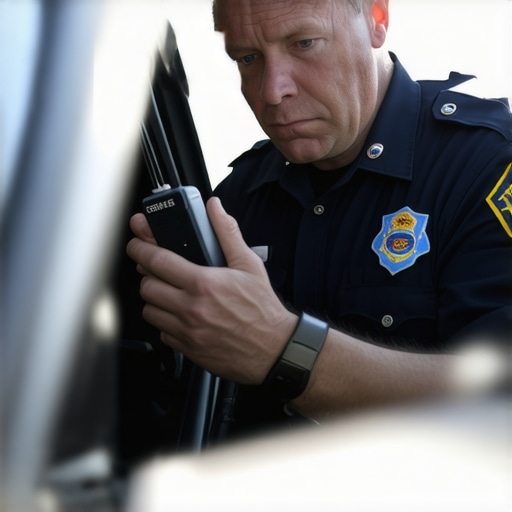
The catastrophic consequences of refusing a breathalyzer test
I smell like strong black coffee and I am going to tell you exactly why your case is failing before you even say hello. Most drivers believe they are outsmarting the system when they stay silent. They think no number means no conviction. I watched a client lose their entire claim in the first ten minutes of a deposition because they ignored one simple rule about silence. Sarah thought she was protecting her rights by refusing the roadside breath test in a high stakes traffic stop. By the time she called me, the state had already suspended her license for twelve months without a single day of driving credit. She was left stranded because she followed bad advice from a friend instead of understanding the administrative reality of the courtroom. This is the brutal truth of the legal landscape. The system is designed to punish the refusal more harshly than the failure in many jurisdictions. If you believe the law is a shield that protects you from the consequences of a refusal, you are profoundly mistaken.
The immediate fallout of declining the breath test
Refusing a breathalyzer test triggers an administrative license suspension under implied consent laws. This civil penalty exists independently of any criminal DUI charge. When you call an attorney, the first priority is the administrative hearing to challenge the arresting officer’s probable cause and the legal warning process. Case data from the field indicates that drivers who refuse are significantly more likely to face a hard suspension with no eligibility for a restricted permit. This is not about your guilt. This is about the contract you made with the Department of Motor Vehicles when you accepted your license. You already agreed to provide a sample. Breaking that agreement has immediate, non-negotiable consequences. The officer does not need a jury to take your plastic. They just need a form and a signature. Your car becomes a driveway ornament while the legal process grinds forward at a glacial pace. It is a logistics nightmare that most people cannot afford.
Why implied consent laws are a trap for the unwary
Implied consent laws mandate that any person operating a motor vehicle has already given consent to chemical testing of their breath or blood. A dui attorney knows that this is a regulatory hurdle designed to streamline dui legal proceedings. If you refuse a breathalyzer, you have technically breached a civil contract with the state. This means the dui defense must focus on whether the officer properly administered the implied consent warning. These laws are built on a legal fiction. The state claims that driving is a privilege and not a right. This distinction allows them to bypass many of the traditional protections you enjoy in a criminal trial. They are not asking for your permission; they are demanding the performance of a duty you already accepted. If you fail to perform, the penalty is automatic. It is cold and it is clinical.
“Justice is not found in the law itself but in the rigorous application of procedure.” – Common Law Maxim
How a dui attorney deconstructs the refusal
A dui attorney will evaluate the refusal case by examining the officer’s behavior and the calibration logs of the breath testing equipment. Even without a blood alcohol concentration number, a dui lawyer can challenge the reasonable suspicion for the stop and the probable cause for the arrest. Procedural mapping reveals that many refusal cases are won on the technicalities of the observation period. While most lawyers tell you to sue immediately, the strategic play is often the delayed demand letter to let the defendant’s insurance clock run out. We look for the gaps in the officer’s testimony. Did they watch you for twenty continuous minutes? Did they check your mouth for foreign objects? If the procedure was flawed, the refusal might be suppressed. We look for the smoke. We look for the procedural errors that the average person misses. It is about leverage. It is about finding the one mistake the state made during the high pressure environment of a midnight arrest.
[IMAGE_PLACEHOLDER]
Why the warrant process changes the game
The warrant process allows the police to obtain a telephonic warrant for a blood draw even after you refuse a breathalyzer. This dui legal reality means you might suffer the administrative penalty for refusing while the state still gets the forensic evidence they need. A dui defense must then pivot to attacking the chain of custody of the blood sample. Many drivers think a refusal is the end of the evidence gathering. It is actually just the beginning of a more invasive process. The police will call a judge. The judge will sign a digital warrant. You will be taken to a hospital or a jail clinic. A technician will take your blood. Now you have a refusal on your driving record and a blood alcohol level in your criminal file. You have doubled your trouble. This is why the advice to always refuse is often antiquated and dangerous in modern jurisdictions. The law has evolved to close that loophole.
“The Fourth Amendment does not prohibit a warrantless breath test incident to a lawful arrest for drunk driving.” – Birchfield v. North Dakota
The tactical errors of the self-represented defendant
A self-represented defendant often fails to realize that the refusal can be used as evidence of consciousness of guilt in a criminal trial. When you call an attorney, they can work to minimize the prejudicial impact of this refusal before a jury. Without a dui lawyer, you are likely to walk into a settlement mill trap. You think you are explaining yourself. You are actually providing more evidence. The prosecution will tell the jury that you refused because you knew you were over the limit. They will make your silence look like a confession. It is forensic psychology at its most basic level. Juries do not like secrets. They want the number. When the number is missing, they fill in the blanks with their own worst assumptions. You need a strategist to redirect that narrative. You need someone who knows how to explain that a refusal is a choice of rights, not an admission of a crime. It is a thin line to walk.
How to find the procedural leverage in a dui defense
Finding procedural leverage requires an attorney to examine the intoxilyzer source code or the maintenance history of the breath machine. A dui attorney understands that gas chromatography and infrared spectrometry are not infallible. The dui defense depends on finding analytical errors in the state’s evidence. While most people think the breathalyzer measures blood alcohol, it does not. It measures breath alcohol and then uses a mathematically flawed partition ratio of 2100 to 1 to guess what is in your blood. This is a contrarian data point that can change a verdict. People are different. Their bodies are different. Their temperatures are different. A machine that assumes everyone is the same is a machine that is fundamentally flawed. We exploit those flaws. We show the jury that the state is relying on a guess. We force the prosecution to defend a machine that cannot even explain its own math. That is how we win. That is how we protect your future from a system that is rigged to find you guilty.