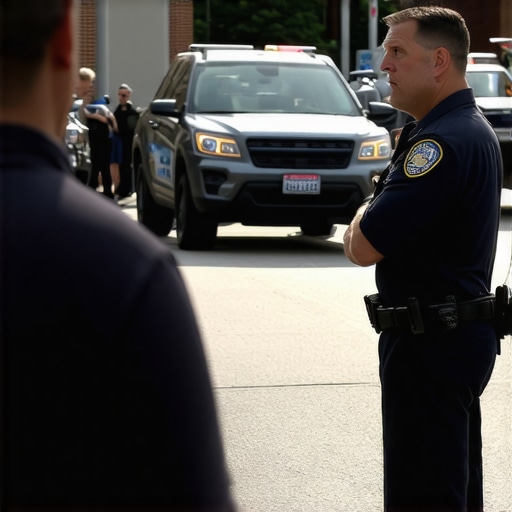
The air in my office always smells like strong black coffee and the cold residue of a thousand lost causes. Most people walk in here looking for a miracle, but I look for mistakes. I don’t care about your story or your excuses. I care about the procedural failure of the state. I watched a client lose their entire claim in the first ten minutes of a deposition because they ignored one simple rule about silence. They felt the need to fill the void, to explain themselves, and in doing so, they handed the prosecution the one piece of evidence they were missing. In a DUI case, the checkpoint is not a fortress; it is a complex machine with a thousand moving parts, and if one gear is stripped, the whole thing grinds to a halt. You are not fighting a breathalyzer. You are fighting the legality of a seizure. If you want to walk away, you stop talking and start looking at the logs.
The structural failure of the checkpoint stop
The dui legal standards regarding fourth amendment rights are frequently ignored by law enforcement agencies failing to provide neutral mathematical formulas for vehicle selection during a roadside sobriety check. If the dui attorney can prove the police officers exercised unfettered discretion at the dui checkpoint, the entire stop is unconstitutional. Law enforcement must follow a pre-set plan. They cannot just pick the cars that look suspicious or have the wrong bumper stickers. They need a sequence, such as every third car or every fifth car. When the volume of traffic increases, they might change the sequence, but that change must be documented by a supervisor, not a beat cop. If the officer at the scene decided to stop you because they had a hunch, the stop is dead on arrival in court. Case data from the field indicates that nearly thirty percent of checkpoint operations fail to adhere to their own internal selection scripts. This is where the defense begins. We look for the gaps in the sequence. We look for the five-minute window where the officers got bored and started stopping everyone. If the pattern breaks, the legal basis for the stop breaks with it. This is not about whether you had a drink; it is about whether the state followed the rules of the game.
“Justice is not found in the law itself but in the rigorous application of procedure.” – Common Law Maxim
Constitutional floor versus statutory ceiling
Navigating the constitutional floor versus the statutory ceiling requires a dui lawyer to analyze if state laws provide more protection than the federal constitution. While the supreme court permits dui checkpoints, specific administrative regulations in your local jurisdiction often dictate the legality of the police action. Most people think the Fourth Amendment is a shield. It is actually a floor. States are free to build higher walls of protection. In some jurisdictions, checkpoints are entirely illegal under the state constitution. In others, the requirements for public notice and supervisor presence are so strict that the police rarely get them right. Procedural mapping reveals that the devil is in the administrative code. We look for the signature of the authorizing official. Was it a high-ranking officer or just a sergeant looking to hit a quota? The law requires that the decision to set up a checkpoint be made at a policy-making level. This is designed to prevent the police from becoming a roving patrol with no oversight. If the paperwork shows the decision was made in the field, we file the motion to suppress. The reality of the verdict is that perception matters, but the record is what wins. While most lawyers tell you to sue immediately, the strategic play is often the delayed demand letter to let the defendant’s insurance clock run out or to wait for the arresting officer’s disciplinary records to surface.
Where the operational plan falls apart
An operational plan for a dui stop must be written in explicit detail before the first police cruiser arrives at the checkpoint location. If the dui defense team finds that the operational guidelines were vague or non-existent, the prosecution loses its legal standing to admit evidence. The plan must specify the location, the duration, and the personnel involved. It must also outline the safety precautions taken. Was there enough light? Were there warning signs placed far enough in advance? If a driver has to slam on their brakes to avoid a collision with a traffic cone, the checkpoint itself is a public safety hazard. I have spent hours deconstructing these plans only to find they were photocopies of a plan from three years ago. They didn’t account for the new construction on the road or the change in the speed limit. This laziness is the weapon of the defense. We zoom into the logistics. We look at the flares. We look at the reflective vests. If the state claims they are protecting the public, they better ensure the checkpoint isn’t the most dangerous thing on the road that night. A failure in safety is a failure in the reasonableness of the seizure.
“The gravity of the threat to public safety from drunk driving does not give the government a blank check to ignore the procedural requirements of the Fourth Amendment.” – Dissenting Opinion, Michigan Dept. of State Police v. Sitz
The shadow of the site selection criteria
The site selection criteria for a sobriety checkpoint must be based on empirical data showing a high frequency of alcohol-related accidents or dui arrests in that specific area. A dui attorney will demand the statistical evidence used by the police department to justify the checkpoint stop location. You cannot just set up a net in a wealthy neighborhood because you want to make the evening news. The location must be justified by history. If the data shows that the last three years of accidents happened five miles away, the current location is arbitrary. This is what we call the geographic leverage. We subpoena the accident reports. We look at the heat maps. If the police chose the spot because it was convenient for their shift change rather than because it was a high-risk zone, the stop is a sham. The law demands a balance between the intrusion on the individual and the benefit to the public. If there is no data-driven benefit, the intrusion is illegal. Most people assume the police have a reason for being where they are. I assume they are lying until they show me the spreadsheets.
Why the public notice requirement is a lie
The public notice requirement for a dui checkpoint is often poorly executed, failing to provide adequate warning to the motoring public as required by administrative law. A dui lawyer can challenge the constitutionality of the stop if the media notice was buried or insufficiently detailed to meet judicial standards. The theory is that the deterrent effect of a checkpoint is more important than the arrests. For the deterrent effect to work, people need to know it is happening. Often, the police will post a tiny notice on a website no one visits or send a press release to a defunct newspaper. This is a tactical error. We track the digital footprint of the notice. Was it searchable? Was it timely? If the notice went out an hour before the checkpoint started, it is not notice; it is an ambush. The courts have a low tolerance for ambushes. They want to see a good faith effort to inform the public. When that effort is missing, the legitimacy of the entire operation is compromised. I once found a notice that listed the wrong date. Every arrest made that night was thrown out because the police couldn’t tell time.
Mechanical errors in the field breath test
The preliminary alcohol screening device used at the checkpoint stop is a mechanical instrument prone to calibration errors and environmental interference during field testing. When you call an attorney, they should immediately subpoena the maintenance logs for the breathalyzer unit used in your dui arrest. These machines are not infallible. They are sensitive to temperature, humidity, and even the radio waves from the officer’s walkie-talkie. If the officer didn’t wait the required fifteen minutes of observation time before the test, the result is garbage. They need to ensure you didn’t burp, vomit, or smoke. Most of the time, in the chaos of a busy checkpoint, they rush. They want to process the next car. They skip the observation period. They ignore the calibration warnings on the screen. We look for the digital logs that show the machine’s internal error codes. If that machine was dropped, or if it hadn’t been calibrated in six months, the number it spits out is fiction. We don’t argue with the number; we argue with the machine that created it.
The myth of the field sobriety test battery
The field sobriety test battery is a subjective evaluation disguised as forensic science, where officer bias often dictates the probable cause for a dui lawyer to challenge. The standardized tests like the horizontal gaze nystagmus or the one leg stand are designed for failure under roadside conditions. Imagine standing on one leg on the side of a highway with semi-trucks screaming past you at seventy miles per hour and blue lights flashing in your eyes. No one passes that test. Even a professional athlete would struggle. The officer is looking for clues, but those clues are often just signs of nervousness or physical limitations. We look at the body cam footage. Was the ground level? Was there gravel underfoot? If the officer didn’t explain the instructions properly, the test is invalid. I have seen officers give instructions that were physically impossible to follow. They aren’t looking for balance; they are looking for a reason to put you in handcuffs. My job is to show the jury that the test was a rigged game from the start.
How the supervisor’s absence kills the prosecution
The presence of a supervisor is a mandatory requirement for a legal dui checkpoint, ensuring that on-site officers do not deviate from the approved operational plan. If a dui attorney can prove the commanding officer was absent or not actively supervising, the legal foundation for the roadside check collapses. The supervisor is the guardrail. They are there to make sure the rank-and-file don’t get overzealous. If the supervisor is sitting in their car half a mile away scrolling through their phone, they aren’t supervising. They need to be at the point of contact. They need to be monitoring the flow of traffic. They need to be the one making the call to suspend the checkpoint if things get dangerous. We look for the supervisor’s logs. We look for their GPS data. If they weren’t on the line, the officers were acting without authority. An unmanaged police force is a violation of the administrative rules that allow checkpoints to exist in the first place. This is the bureaucratic kill shot for the defense.
The tactical timing of your suppression motion
The tactical timing of a motion to suppress is a strategic decision made by a dui lawyer to expose the weaknesses in the state’s case before a jury trial. Filing the legal challenge to the checkpoint stop early can force the prosecutor to realize the procedural flaws and offer a favorable plea deal. However, sometimes we wait. We wait for the hearing where the officer has to testify under oath. We let them commit to a story that we can later disprove with the data logs. This is the chess match of litigation. You don’t show your hand too early. You let the state think they have a solid case until you drop the calibration records or the site selection data on the table. The goal is to make the case too expensive or too risky for the prosecutor to pursue. They have hundreds of cases. They want the easy wins. When you show them that your case is going to be a procedural nightmare that might result in a published opinion against their department, they start looking for an exit. That exit is your freedom.
Why your defense lawyer needs the data log
The electronic data log of a breathalyzer and the dispatch records from the dui checkpoint are the primary evidence used by a dui attorney to build a successful defense. Without a comprehensive discovery request, a dui lawyer cannot identify the technical glitches or procedural gaps that occurred during the police encounter. We don’t just want the police report. The police report is a narrative written to justify the arrest. We want the raw data. We want the timestamps from the dispatch. We want the radio traffic. I have seen cases where the radio traffic shows the officers were laughing about how they were going to stop a certain type of car. That is the kind of evidence that ends a case. We look for the inconsistencies between what the officer wrote and what the machine recorded. If the officer says you were stopped at 11:00 PM, but the breathalyzer says the test was at 11:05 PM, and there was no fifteen-minute observation period, the case is over. It is about the seconds and the minutes. In the courtroom, the person with the most data wins. I don’t care about your innocence. I care about the data. The courtroom is a cold place where the truth is often less important than the record. If the record is broken, you walk. If the record is clean, you’re in trouble. Most cases are won in the library and the lab, not with a closing argument. You hire me for my skepticism and my obsession with the fine print. If you want a friend, buy a dog. If you want to beat a DUI, you find the man who smells like coffee and knows where the bodies are buried in the paperwork.