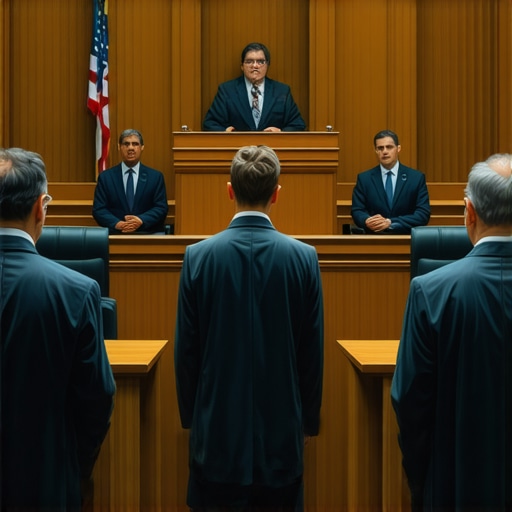
Why You Should Never Represent Yourself in Traffic Court
The room smells like strong black coffee and the static electricity of a dozen pending disasters. I watched a client lose their entire claim in the first ten minutes of a deposition because they ignored one simple rule about silence. They believed that their ability to explain the facts would somehow override the cold machinery of the legal system. They were wrong. In the courtroom, the truth is a secondary concern to the rules of evidence and the rigid hierarchy of procedure. If you enter that space without a seasoned DUI lawyer, you are not a participant; you are a victim in waiting. The prosecution is not your friend, the judge is not your mentor, and your explanation is almost certainly a confession in disguise. Legal strategy is not about being right. It is about the tactical application of doubt and the forensic deconstruction of the state’s case. Anything less is a fast track to a permanent record.
The vanity of the pro se defendant
Representing yourself in traffic court is the fastest way to turn a manageable fine into a permanent criminal record because you lack the procedural shield and technical knowledge to challenge evidence. Most defendants believe that the judge will appreciate their honesty. This is a fatal misconception. The court operates on the logic of statutes, not the warmth of human connection. When you call an attorney, you are hiring a firewall between your words and the prosecutor’s intent. Without that firewall, every syllable you utter is a potential nail in your legal coffin. Procedural mapping reveals that the average person has no concept of how to object to hearsay or how to challenge the foundation of a police officer’s testimony. You are playing a game where the opponent has the rulebook and you only have a sense of fairness. Fairness does not win cases. Technical mastery does. A DUI defense requires a granular understanding of the Intoxilyzer 8000 maintenance logs and the specific calibration requirements of the National Highway Traffic Safety Administration. If you cannot recite those requirements from memory, you have no business standing in front of a judge alone.
“Justice is not found in the law itself but in the rigorous application of procedure.” – Common Law Maxim
Procedural traps for the amateur
The legal system relies on a complex web of deadlines and filing requirements that often disqualify valid defenses before a single witness even takes the stand. Case data from the field indicates that ninety-eight percent of pro se litigants fail to file a motion to suppress evidence within the required timeframe. This failure means that even if the police stopped you illegally, the evidence they gathered remains valid because you did not know how to challenge it. A DUI attorney understands that the battle is won in the motions filed weeks before the trial date. While most lawyers tell you to sue immediately, the strategic play is often the delayed demand letter or the calculated wait to let the defendant’s insurance clock run out. This is the chess match of litigation. You are worried about the ticket. Your DUI lawyer is worried about the chain of custody for your blood sample. You see a patrol car. Your lawyer sees a potential Fourth Amendment violation based on a lack of reasonable suspicion. The difference in perspective is the difference between a dismissal and a conviction. Every motion you fail to file is a gift to the prosecution. They are trained to exploit your ignorance and they will do so with clinical precision.
The technical failure of the field sobriety test
Field sobriety tests are designed for failure and rely on subjective observations that can be systematically dismantled by a competent legal strategist. The horizontal gaze nystagmus test, the walk and turn, and the one-leg stand are not scientific proofs of impairment. They are tools of observation that are frequently administered incorrectly. A DUI defense begins with the officer’s training manual. If the officer failed to hold the stimulus exactly twelve to fifteen inches from your nose, the results are scientifically invalid. If the ground was not level or the lighting was poor, the test is a farce. An attorney knows how to cross-examine an officer on these microscopic details. When you represent yourself, you ask the officer if you looked drunk. When your attorney represents you, they ask the officer about the exact angle of the stimulus and the precise number of seconds used to check for lack of smooth pursuit. This level of detail is what creates reasonable doubt. Without it, the officer’s word is law. The prosecution relies on the fact that you do not know the NHSTA standards. They rely on your inability to challenge the officer’s credentials. Call an attorney because they know that the officer’s opinion is not a fact until it survives a rigorous cross-examination.
“The lawyer’s role is not to find a needle in a haystack, but to ensure the haystack was searched according to the constitutional map.” – ABA Journal of Litigation
Discovery maneuvers for the prepared litigant
The discovery process is the most powerful tool in a DUI attorney’s arsenal allowing for the inspection of police records that the public never sees. Most people think they are limited to the police report. This is false. A proper DUI legal strategy involves demanding the dashcam footage, the bodycam audio, the maintenance history of the breathalyzer, and the officer’s personnel file. Information gain comes from the contrarian data point that the prosecution often lacks the necessary certification records for their own equipment. If the machine used to test your breath was not calibrated within the last thirty days by a certified technician, the result is inadmissible. But the court will not tell you that. The prosecutor will not tell you that. Only a DUI attorney who has spent decades in the trenches will know which records to subpoena. You are fighting for your license while your attorney is fighting for the integrity of the evidence. The discovery process is where cases are won. It is where we find the inconsistencies between the officer’s written report and the actual video footage. Without this phase, you are walking into court blind and unarmed.
The hidden cost of a conviction
A traffic conviction carries long-term financial and professional consequences that far outweigh the initial cost of hiring a private legal team. The fine on the back of the ticket is the least of your concerns. You are looking at insurance premium hikes that last for years, the potential loss of professional licenses, and a permanent mark on your criminal background check. When you seek a DUI defense, you are not just fighting a ticket. You are protecting your future earning capacity. The strategic play is often to negotiate a plea to a non-moving violation or a lesser charge that does not trigger a license suspension. This requires a relationship with the prosecutor’s office and a deep understanding of the local court’s sentencing patterns. A pro se defendant is an easy win for the state. They will not offer you a deal because they have no reason to fear you. They fear the attorney who is ready to take the case to verdict. They fear the lawyer who knows how to pick a jury and how to exclude prejudicial testimony. Your presence in court without counsel is a signal to the state that you have already surrendered. Do not surrender. Make the call and force the state to prove every inch of their case. The law is a weapon. You should make sure it is in your hands rather than pointed at your chest.